AI-assisted cinematic ambient publishing system

Launch a premium classical ambient YouTube channel with a production-grade content engine.

Plan searchable long-form videos, produce original music assets, inspect quality gates, generate thumbnails, create Shorts packages, and publish only approved drafts.
30 daylaunch calendar3hlong-form target40tags per release
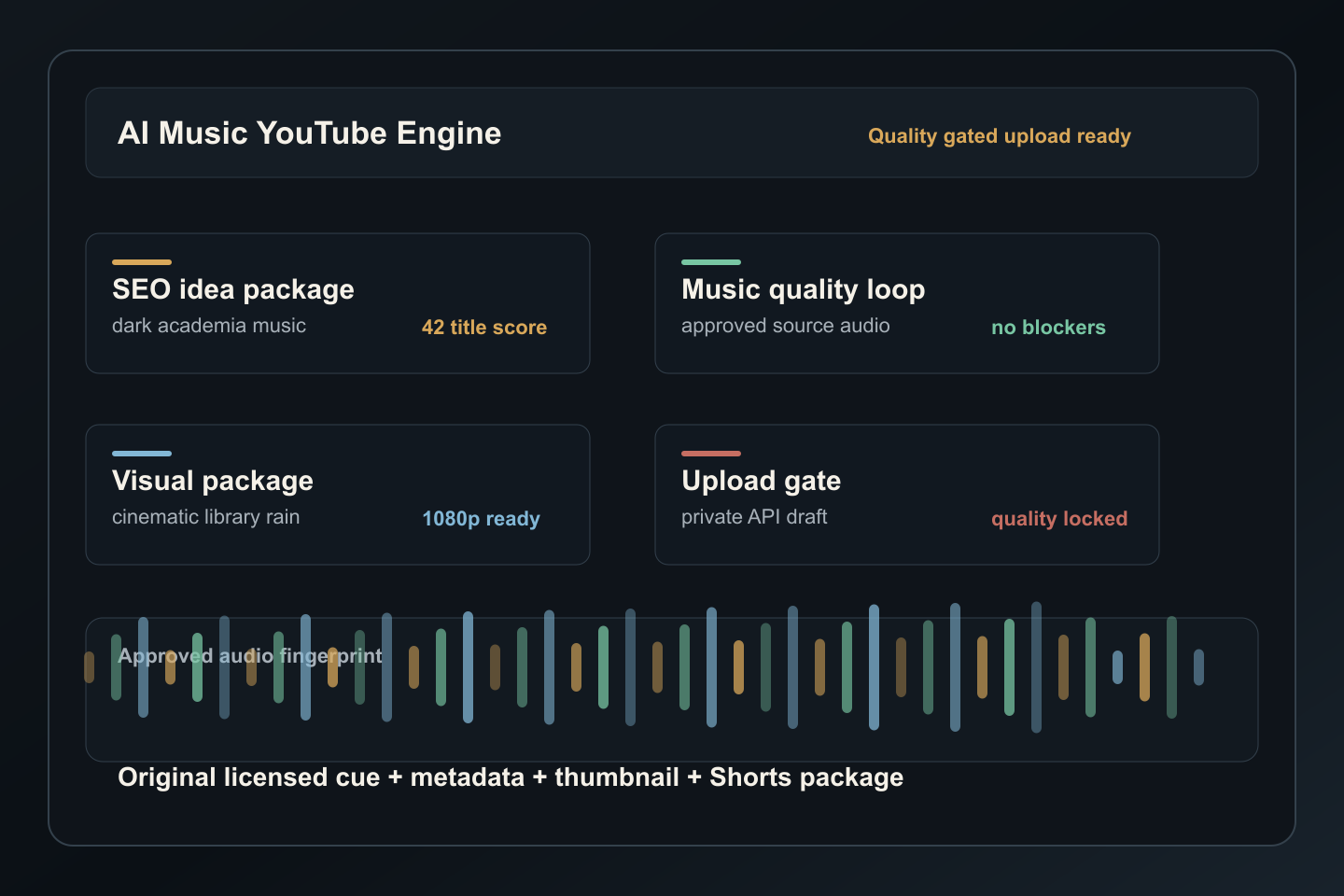
AI Music YouTube Engine dashboard preview

For creators building searchable ambient channels

One system for music niches that reward consistency, retention, and trust.

Dark academia classical musicCinematic focus musicFantasy orchestral ambienceEmotional piano and stringsCoding and deep work musicDnD and RPG background musicMedieval tavern ambienceRainy night piano

Production workflow

From idea to upload without losing auditability.

The engine keeps prompts, licenses, source files, metadata, and quality reports attached to each release so the channel can scale without publishing weak or untraceable assets.

Discover demand

Cluster keywords, score titles, generate playlists, and map answer-ready questions before production starts.

Create original assets

Use provider-agnostic prompts, licensed sample rendering, manual imports, visuals, thumbnails, and Shorts cuts.

Inspect quality

Block mismatched durations, rejected drafts, missing source licenses, and weak audio before any upload path runs.

Package or publish

Export a manual upload folder or upload private drafts through the YouTube API when credentials are configured.

SEO + AEO architecture

Built for search snippets, answer engines, and human operators.

SEO + AEO

Search strategy that reads like a real editorial desk.

  • Long-tail keyword clusters
  • Title scoring and variants
  • FAQ and answer snippets
  • Playlist and pinned comment ideas
Production

A repeatable workflow for long-form ambience releases.

  • Prompt and license audit trail
  • Music and visual provider adapters
  • Thumbnail concepts
  • Shorts captions and clips
Quality

Publishing guardrails for a premium channel.

  • Approved source audio required
  • Audio QC and reflective loop
  • Duration checks
  • Synthetic disclosure and compliance notes

Quality gate

Bad drafts should never reach the upload button.

The workflow explicitly blocks rejected audio, missing approved source cues, mismatched runtime claims, missing license notes, and publish packages that are only suitable for internal review.

Audio QCDuration, loudness, tonal confidence, noise findings, source cue checks.
ComplianceAI disclosure, license notes, no impersonation, no false orchestra claims.
Upload readinessManual package or API draft only after approval and publish-ready inspection.

Admin console

A focused operating surface for every release.

Idea packageSEO titles, tags, prompts, thumbnail concepts, Shorts ideas.
Quality loopImprove, audition, approve, reject, inspect, and package assets.
Visual generationRealistic image prompts, Seedance request packages, thumbnail output.
AnalyticsImport performance snapshots and generate weekly recommendations.
Release controlPrivate upload defaults and blocked API calls for rejected material.
PreviewListen to audio, inspect visuals, and open generated media from the UI.

Answer-ready FAQ

Clear answers for creators, crawlers, and AI answer engines.

What does the AI Music YouTube Engine create?

It creates searchable YouTube metadata, original music prompts, visual prompts, thumbnail concepts, Shorts packages, upload folders, quality reports, and optional YouTube API upload drafts for cinematic ambient music channels.

Can it publish directly to YouTube?

Yes. When YouTube OAuth credentials are configured and the selected video passes quality gates, the engine can upload a private or scheduled draft through the YouTube Data API. Otherwise it creates a manual upload package.

Does it use copyrighted music or imitate living composers?

No. The workflow is designed to avoid impersonating living artists, avoid copyrighted samples, track AI tools and licenses, and include optional AI-assisted disclosure language.

Why is quality gating important for ambient music channels?

Ambient music channels depend on listener trust and long watch sessions. The quality gate blocks short drafts, harsh audio, missing licenses, rejected sources, and titles that overpromise duration or production value.